
| ARTICLE

Optimization of the Rice Agro-Industry Through Modern Technological Support
Challenges in the Rice Agro-Industry Chain
The rice agro-industry plays a strategic role in maintaining national food security. However, the production and post-harvest processes still face various obstacles that affect both quality and quantity. Sun-dependent drying often leads to inconsistent grain quality, especially during unpredictable weather. Meanwhile, harvesting and threshing that are still done manually frequently cause significant yield losses. In the milling stage, the use of non-standardized machines can produce a higher amount of broken rice, lowering its market value. These challenges show that modernizing the production system is urgently needed to improve efficiency and strengthen the competitiveness of the rice industry.
The Role of Technology in Improving Efficiency and Quality
Technology offers solutions to overcome the limitations that have long hindered the performance of the rice industry. Modern harvesting and threshing machines, such as combine harvesters, can speed up processes and reduce losses in the field. In the drying stage, vertical dryers and mechanical dryers allow faster and more even drying that does not depend on weather, helping maintain grain quality at the ideal standard. Meanwhile, modern milling equipment such as huskers, polishers, and paddy separators, provides better precision in maintaining the shape and color of rice grains. The integration of digital technology and IoT sensors also brings added value through real-time monitoring of machine conditions, temperature, humidity, and grain quality. This modernization not only increases efficiency but also produces more consistent rice quality.
Benefits of Modernization for the National Rice Industry
The use of technology provides significant benefits for agro-industry actors. Production processes become faster, more precise, and less prone to errors. The quality of rice also becomes more uniform and cleaner, with a lower percentage of broken grains, allowing it to meet premium market demands. Technology further reduces operational costs through energy efficiency, lower yield losses, and better use of data for more accurate decision-making. This modernization aligns with the National Food Self-Sufficiency Program 2025 based on the Decree of the Indonesian Minister of Agriculture No. 73/Kpts/OT.050/M/02/2025 on the Regular Food Self-Sufficiency Task Force, which emphasizes improving productivity and national food security. All these factors make the rice industry more competitive in facing a dynamic market.
Proven Implementation of Technology
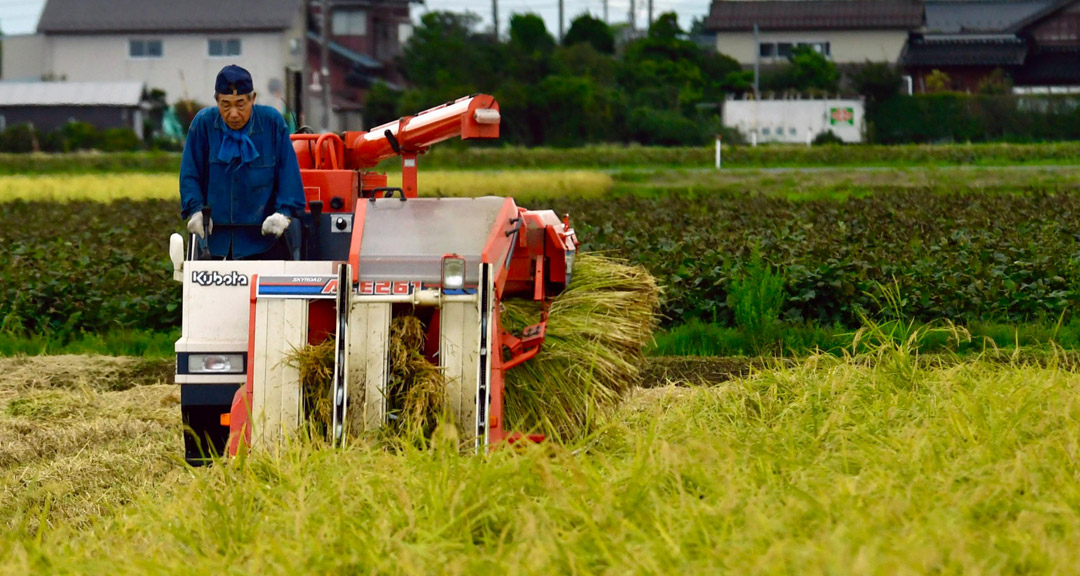
Various real-world examples show that modern technology produces concrete results. The use of combine harvesters can reduce harvest losses to below three percent. Drying technologies such as vertical dryers can maintain grain moisture at the ideal range of 12–14 percent, leading to more optimal milling results. Modern rice milling units equipped with color sorters and polishing machines can produce rice with higher brightness and cleanliness. This consistency in quality opens greater opportunities for industry players to enter premium markets, even for export.
PT Maknah Group Indonesia: Contributing to the Modernization of the Rice Agro-Industry
PT Maknah Group Indonesia has taken an active role in promoting the modernization of the rice agro-industry through various cultivation optimization projects in the provinces of Lampung and Riau. These efforts focus on strengthening production and post-harvest processes by introducing more efficient and standardized technologies, while also improving the capacity of farmers and milling partners in the regions. Through this program, Maknah Group not only introduces modern harvesting machines, dryers, and processing systems, but also encourages more precise and sustainable cultivation practices. The company’s involvement in these projects reflects its strong commitment to accelerating the transformation of the national rice industry, improving product quality, and supporting food security in key production areas.